UAV / DRONE PROGRAMS • LOW-GPA APPLICATIONS • WHOLESALE DISTRIBUTION

Drone Spray Adjuvants for Agriculture

I&B Ag Supply supports dealers, distributors, applicators, and growers with wholesale agricultural drone adjuvants designed for low-GPA UAV spraying. Improve deposition, manage drift risk, and keep operations running clean—backed by nationwide distribution.

Request a drone adjuvant recommendation →

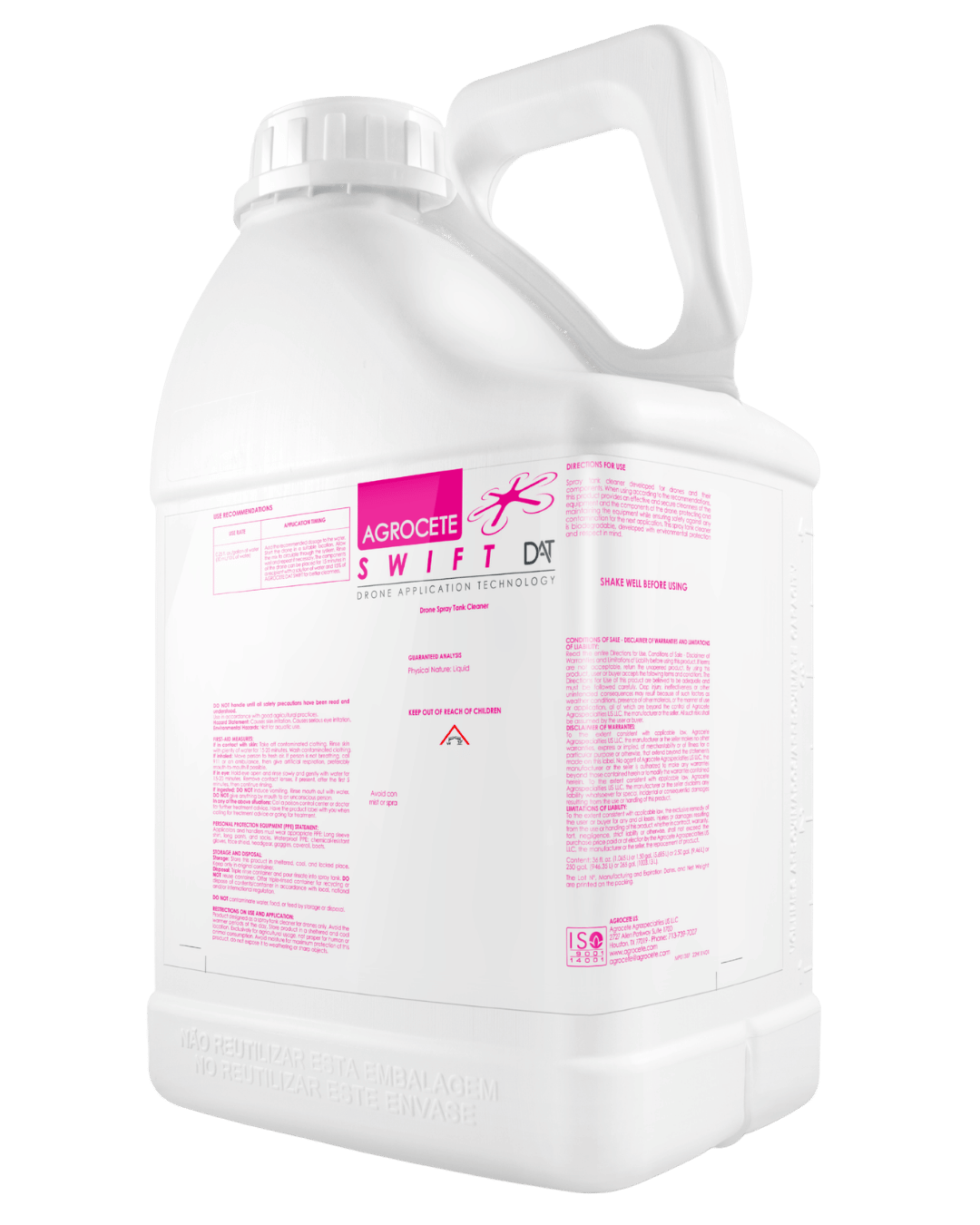
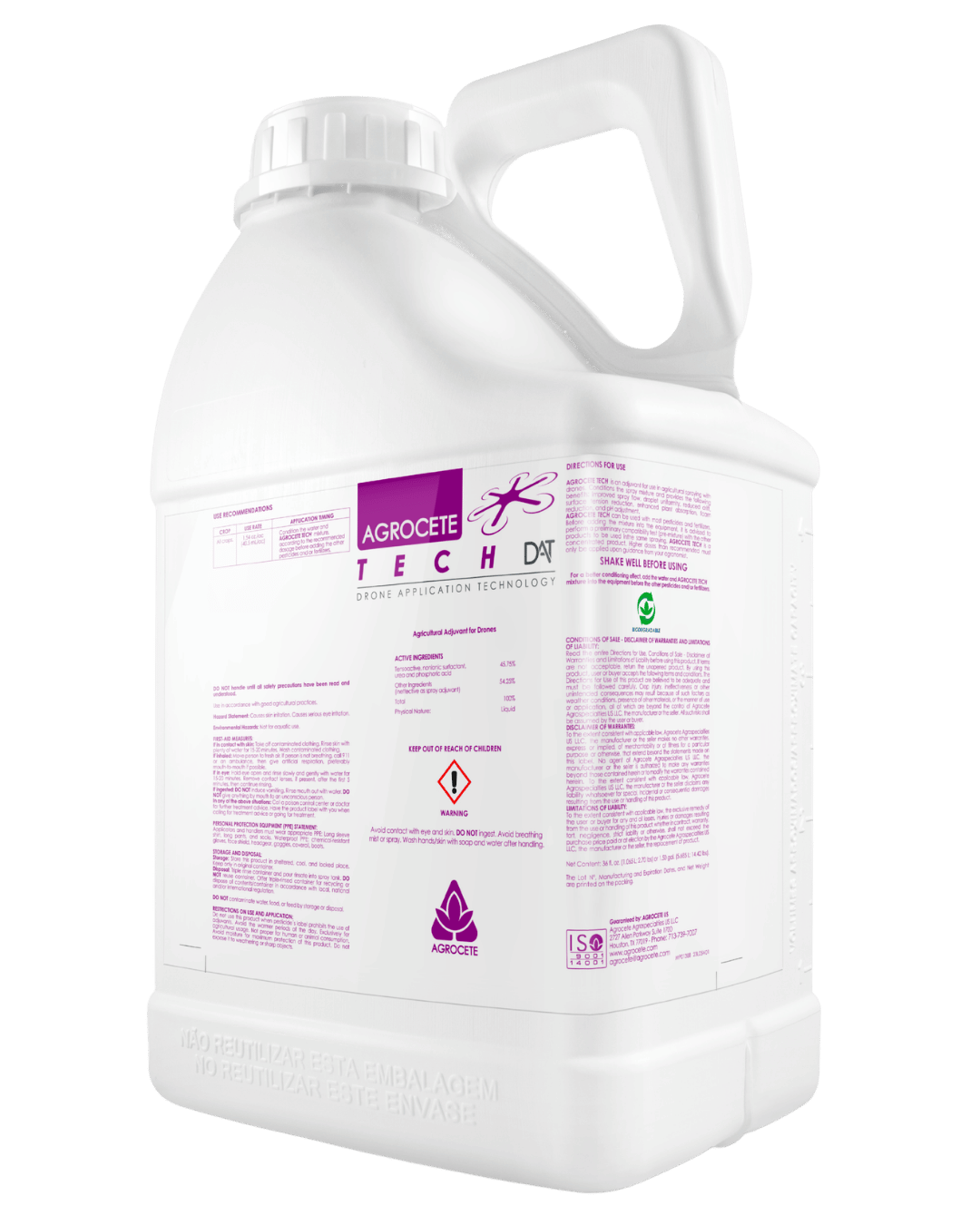
Looking for the two most common options used in UAV programs? TECH DAT supports drift-focused performance, and SWIFT DAT supports drone tank/system cleaning.

How a Drone Adjuvant Program Works

Simple and repeatable—built for fast UAV operations.

Quick tip: For the fastest recommendation, include target GPA, crop, and your shipping state.

How to Choose the Right Adjuvant for Drone Spraying

Selecting the right drone adjuvant starts with understanding how low-GPA UAV applications change spray behavior. Agricultural drone spraying often runs 1–5 gallons per acre (GPA), which increases concentration and can magnify compatibility challenges.

1) Start with Target GPA

Lower carrier volume increases concentration inside the tank. At 1–2 GPA, evaporation risk and droplet behavior are more sensitive than at higher volumes.

2) Decide: Drift Control or Coverage Priority

Wind, field layout, and nearby sensitive areas may push you toward drift-focused support. If on-target placement is the priority, deposition/retention may be evaluated—always per label.

3) Match Crop & Canopy Density

Early-season applications can need different behavior than dense, late-season canopies. Leaf surface, crop height, and UAV airflow can influence deposition and retention.

4) Account for Tank Mix Complexity

Multi-product mixes increase compatibility sensitivity under low-GPA. Mixing order, water quality, and concentration matter more in drone tanks.

5) Factor Weather & Evaporation Risk

Temperature, humidity, and wind affect evaporation and drift. Drone programs move fast—repeatable performance across variable conditions is key.

6) Protect Operational Repeatability

Consistency isn’t only in the field—it’s in the equipment. Tank/system cleaning between loads helps reduce residue and cross-contamination risk. If cleanout matters in your operation, start here: UAV tank & system cleaner (SWIFT DAT).

Quick Selection Table

Use this as a fast starting point. Final selection should align with the pesticide label, your target GPA, and local application requirements.

Application Goal Primary Concern Typical Adjuvant Focus
Drift reduction Off-target movement risk Droplet spectrum / drift-focused support — drift-support UAV adjuvant (TECH DAT)
On-target deposition Bounce, evaporation, uneven placement Deposition & retention support (per label)
Coverage / spreading Leaf contact and distribution Coverage-support surfactant strategy (per label)
Mix stability Separation or inconsistency at low GPA Conditioning / compatibility support (mix order + water quality)
Equipment reliability Residue buildup and cross-contamination Tank & system cleaning between loads — UAV tank & system cleaner (SWIFT DAT)

Want a fast recommendation? Request a drone adjuvant recommendation for your crop & GPA.

Common Drone Adjuvant Functions

Most agricultural drone adjuvants fall into a few practical categories. Below are the common “jobs” these products do in a UAV program.

Drift Management (Low-GPA UAV)

Helps manage droplet spectrum to reduce off-target movement while maintaining coverage efficiency—especially in variable wind conditions.

Common option: TECH DAT

Deposition & Retention Support

Supports on-target placement and canopy retention to help reduce bounce, evaporation losses, or uneven coverage in fast aerial passes.

Need a recommendation? Request one

Surfactant / Coverage Support

Coverage tools can help spreading and contact depending on label, target crop, and conditions. Selection should align with the product label and application goals.

Not sure what fits? Contact us

Drone Tank & System Cleaning

Helps remove residues and reduce cross-contamination risk between loads—supporting operational reliability in drone spray programs.

Common option: SWIFT DAT

Two Common UAV Program Options

I&B Ag Supply distributes Agrocete products used in UAV programs. These are two common choices—one focused on drift support and one focused on cleaning.

Always follow product label directions and local application requirements.

Wholesale Support for UAV & Aerial Spray Programs

I&B Ag Supply is a nationwide agricultural wholesaler supporting UAV programs with scalable inventory and bulk pricing. We help simplify sourcing and delivery.

  • Bulk pallet availability for seasonal demand and multi-location programs
  • Competitive wholesale pricing designed to protect margins
  • Nationwide freight coordination to keep delivery simple
  • Repeat-season supply relationships built for long-term growth

Need a Quick UAV Adjuvant Recommendation?

Share your target GPA, crop, and operator setup. We’ll help confirm product fit for your agricultural drone adjuvants program.

Contact I&B Ag Supply

Frequently asked questions

Quick answers for low-GPA UAV spraying, drone adjuvant selection, and wholesale program support.

What are agricultural drone adjuvants?+
Agricultural drone adjuvants are spray additives used to support low-volume (low-GPA) UAV applications. They can help manage droplet behavior, support deposition and coverage, reduce drift potential, and improve tank mix consistency in drone spraying.
What is a UAV adjuvant?+
A UAV adjuvant is an adjuvant selected for unmanned aerial vehicle (drone) application conditions—especially low-GPA spraying—where droplet behavior, evaporation risk, and mix stability can change compared with higher-volume ground spraying.
Why are specialized adjuvants often recommended for drone spraying?+
Drone spraying typically uses lower gallons per acre (GPA) than ground rigs. Lower carrier volume can increase concentration, evaporation risk, and drift potential. Specialized adjuvants are often used to support droplet spectrum management, on-target deposition, and tank mix stability under low-volume conditions.
How can adjuvants support drift management in drone applications?+
Some adjuvants are designed to influence spray droplet characteristics. In low-GPA drone applications, managing droplet spectrum may help reduce off-target movement while maintaining coverage efficiency. Drift outcomes also depend on nozzle choice, wind, temperature inversions, and label compliance.
What GPA rates are typical for agricultural drone spraying?+
Agricultural drone applications commonly operate between 1–5 gallons per acre (GPA), depending on crop, product label, and application goals.
Drone Adjuvants for Agriculture | Wholesale UAV Spray Additives

UAV / DRONE PROGRAMS • LOW-GPA APPLICATIONS • WHOLESALE DISTRIBUTION

Drone Spray Adjuvants for Agriculture

I&B Ag Supply supports dealers, distributors, applicators, and growers with wholesale agricultural drone adjuvants designed for low-GPA UAV spraying. Improve deposition, manage drift risk, and keep operations running clean—backed by nationwide distribution.

Looking for the two most common options used in UAV programs? TECH DAT supports drift-focused performance, and SWIFT DAT supports drone tank/system cleaning.

How a Drone Adjuvant Program Works

Simple and repeatable—built for fast UAV operations.

Quick tip: For the fastest recommendation, include target GPA, crop, and your shipping state.

How to Choose the Right Adjuvant for Drone Spraying

Selecting the right drone adjuvant starts with understanding how low-GPA UAV applications change spray behavior. Agricultural drone spraying often runs 1–5 gallons per acre (GPA), which increases concentration and can magnify compatibility challenges.

1) Start with Target GPA

Lower carrier volume increases concentration inside the tank. At 1–2 GPA, evaporation risk and droplet behavior are more sensitive than at higher volumes.

2) Decide: Drift Control or Coverage Priority

Wind, field layout, and nearby sensitive areas may push you toward drift-focused support. If on-target placement is the priority, deposition/retention may be evaluated—always per label.

3) Match Crop & Canopy Density

Early-season applications can need different behavior than dense, late-season canopies. Leaf surface, crop height, and UAV airflow can influence deposition and retention.

4) Account for Tank Mix Complexity

Multi-product mixes increase compatibility sensitivity under low-GPA. Mixing order, water quality, and concentration matter more in drone tanks.

5) Factor Weather & Evaporation Risk

Temperature, humidity, and wind affect evaporation and drift. Drone programs move fast—repeatable performance across variable conditions is key.

6) Protect Operational Repeatability

Consistency isn’t only in the field—it’s in the equipment. Tank/system cleaning between loads helps reduce residue and cross-contamination risk. If cleanout matters in your operation, start here: UAV tank & system cleaner (SWIFT DAT).

Quick Selection Table

Use this as a fast starting point. Final selection should align with the pesticide label, your target GPA, and local application requirements.

Application Goal Primary Concern Typical Adjuvant Focus
Drift reduction Off-target movement risk Droplet spectrum / drift-focused support — drift-support UAV adjuvant (TECH DAT)
On-target deposition Bounce, evaporation, uneven placement Deposition & retention support (per label)
Coverage / spreading Leaf contact and distribution Coverage-support surfactant strategy (per label)
Mix stability Separation or inconsistency at low GPA Conditioning / compatibility support (mix order + water quality)
Equipment reliability Residue buildup and cross-contamination Tank & system cleaning between loads — UAV tank & system cleaner (SWIFT DAT)

Want a fast recommendation? Request a drone adjuvant recommendation for your crop & GPA and we’ll help confirm fit for your program.

Why Agricultural Drone Spraying Often Needs Specialized Adjuvants

Low GPA changes the mix

Lower carrier volume increases concentration and can magnify compatibility and consistency issues—especially with multi-product tank mixes.

Droplet behavior matters

Small droplets, aerial passes, and variable wind can raise off-target risk. Drift management tools help reduce movement while maintaining coverage.

Repeatability is the win

Drone programs move fast. The goal is a simple, repeatable drone adjuvant strategy that performs across operators, environments, and seasons.

Common Drone Adjuvant Functions

Most agricultural drone adjuvants fall into a few practical categories. Below are the common “jobs” these products do in a UAV program.

Surfactant / Coverage Support

Coverage tools can help spreading and contact depending on label, target crop, and conditions. Selection should align with the product label and application goals.

Not sure what fits your setup? get a drone adjuvant recommendation

Two Common UAV Program Options

I&B Ag Supply distributes Agrocete products used in UAV programs. These are two common choices—one focused on drift support and one focused on cleaning.

Always follow product label directions and local application requirements.

Wholesale Support for UAV & Aerial Spray Programs

I&B Ag Supply is a nationwide agricultural wholesaler supporting UAV programs with scalable inventory and bulk pricing. Whether you’re building a dealer program, running custom application, or purchasing for your operation, we help simplify sourcing and delivery.

  • Bulk pallet availability for seasonal demand and multi-location programs
  • Competitive wholesale pricing designed to protect margins
  • Nationwide freight coordination to keep delivery simple
  • Repeat-season supply relationships built for long-term growth

Need a Quick UAV Adjuvant Recommendation?

Share your target GPA, crop, and operator setup. We’ll help confirm product fit for your agricultural drone adjuvants program.

Contact I&B Ag Supply

Frequently asked questions

Quick answers for low-GPA UAV spraying, drone adjuvant selection, and wholesale program support.

What are agricultural drone adjuvants?
Agricultural drone adjuvants are spray additives used to support low-volume (low-GPA) UAV applications. They can help manage droplet behavior, support deposition and coverage, reduce drift potential, and improve tank mix consistency in drone spraying.
What is a UAV adjuvant?
A UAV adjuvant is an adjuvant selected for unmanned aerial vehicle (drone) application conditions—especially low-GPA spraying—where droplet behavior, evaporation risk, and mix stability can change compared with higher-volume ground spraying.
Why are specialized adjuvants often recommended for drone spraying?
Drone spraying typically uses lower gallons per acre (GPA) than ground rigs. Lower carrier volume can increase concentration, evaporation risk, and drift potential. Specialized adjuvants are often used to support droplet spectrum management, on-target deposition, and tank mix stability under low-volume conditions.
How can adjuvants support drift management in drone applications?
Some adjuvants are designed to influence spray droplet characteristics. In low-GPA drone applications, managing droplet spectrum may help reduce off-target movement while maintaining coverage efficiency. Drift outcomes also depend on nozzle choice, wind, temperature inversions, and label compliance.
What GPA rates are typical for agricultural drone spraying?
Agricultural drone applications commonly operate between 1–5 gallons per acre (GPA), depending on crop, product label, and application goals. These lower volumes can make mixing order, water quality, and adjuvant selection more important for consistent performance.
How does low-GPA spraying affect tank mix compatibility?
Lower carrier volumes increase product concentration inside the tank, which can make mixing order, compatibility, and water quality more critical than in higher-volume ground applications. Following label directions and using proper mixing practices can help reduce separation, residues, and uneven application.
Do drone adjuvants improve canopy penetration?
Adjuvants can support spreading, adhesion, and retention depending on adjuvant type, spray solution, and conditions. In drone spraying, results depend on crop stage, droplet size, wind, humidity, and the application setup. Always follow label directions.
Are adjuvants required for drone pesticide applications?
Adjuvant requirements are determined by the pesticide product label. Some labels require specific adjuvant types, while others allow optional use. Applicators should follow pesticide label directions and local regulations when selecting adjuvants for drone applications.
What information is needed to recommend the right adjuvant for drones?
The fastest recommendation usually includes target GPA, crop, product(s) being applied, nozzle/setup, typical wind conditions, and your shipping state. Adjuvant selection should align with the pesticide label and application goals (drift, deposition, coverage, or cleaning).
Do you offer wholesale agricultural drone adjuvants?
Yes. I&B Ag Supply provides wholesale agricultural drone adjuvants to dealers, distributors, custom applicators, and commercial farm operations. We support UAV programs with bulk purchasing options and scalable inventory for seasonal demand.
Do you ship drone adjuvants nationwide?
Yes. I&B Ag Supply provides nationwide distribution throughout the continental United States. We coordinate freight and bulk shipments to support regional dealers, multi-location operations, and commercial applicators.
What’s the difference between a drift adjuvant and a tank/system cleaner for drone spraying?
A drift-focused adjuvant is typically selected to support droplet behavior and reduce off-target movement risk in low-GPA UAV spraying. A tank/system cleaner is used between loads to help remove residues and reduce cross-contamination risk in drone spray equipment.
Wholesale Agricultural Supply & Distribution Crop Protection, Foliar Nutrition, and Adjuvants serving dealers, resellers, and farm operations across the U.S.

© 2026 I&B Ag Supply. All rights reserved.
Privacy Policy.

I&B Ag Supply | 505 80th Ave, Swea City, IA 50590 | Direct Sales: (712) 214-4235