
BRANCHING FOLIAR FERTILIZER
GRAD
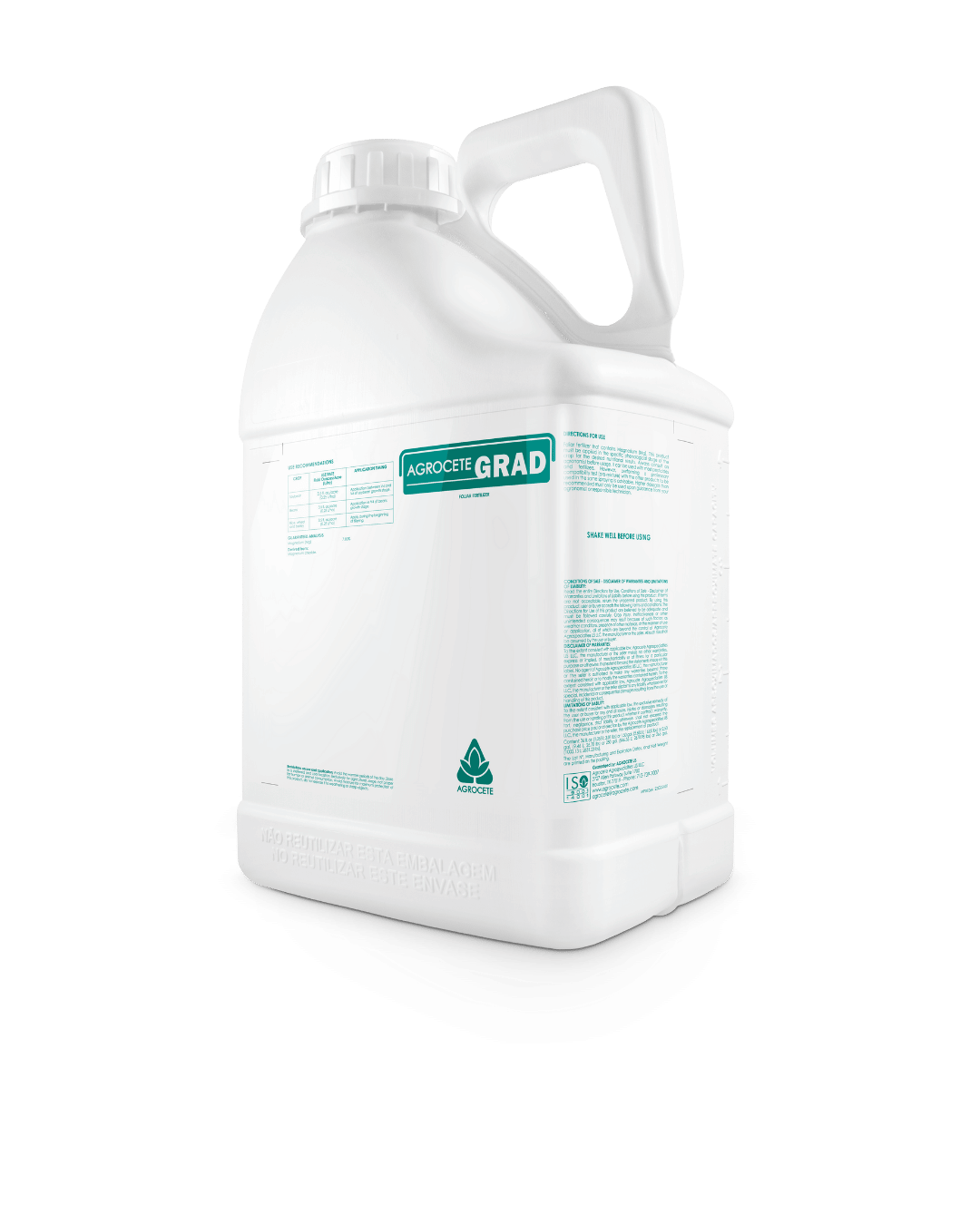
Agrocete GRAD is a branching foliar fertilizer designed to improve crop structure, increase branching and tillering, and support more uniform plant architecture. It helps crops build stronger stems and more productive growth habits without altering crop timing or relying on growth regulators.
Branching Foliar
Fertilizer
Structure That Pays.
Inputs That Earn Their Keep.
1+ Test Acres
Technical Specs:
- Enhanced Branching
- Increased Flowering
- Increased Pods
- Decreased Lodging
- Increased Tillering
- Increased Nutritional Intake
- No PGRs
- Performance indicators include better root system support, increased tillers and branches, more uniform plants, and a thickened stem base
Use Rate: 3.5 oz / acre
CONTACT FOR WHOLESALE PRICE
"Built for Structure"
"GRAD helps improve crop structure and branching early, leading to more uniform stands and stronger plant architecture. It’s a reliable foliar tool when stand consistency, lodging tolerance, and overall crop structure matter." - Arthur Costa, Agronomist
GRAD FAQ
Quick answers about branching support, crop structure, tillering, application timing, and foliar program fit.
What is GRAD?
Is GRAD a foliar fertilizer or a plant growth regulator (PGR)?
How does GRAD support branching and crop structure?
What crops commonly benefit from GRAD?
Does GRAD affect crop timing or maturity?
When should GRAD be applied for best results?
Can GRAD be tank-mixed with other crop inputs?
Where does GRAD fit in a crop fertility program?
GRAD is part of the Agrocete Foliar Nutrition & Adjuvant System.
BRANCHING FOLIAR FERTILIZER
GRAD
Agrocete GRAD is a branching foliar fertilizer designed to improve crop structure, increase branching and tillering, and support more uniform plant architecture. It helps crops build stronger stems and more productive growth habits without altering crop timing or relying on growth regulators.
Branching Foliar
Fertilizer
Structure That Pays.
Inputs That Earn Their Keep.
1+ Test Acres
Technical Specs:
- Enhanced Branching
- Increased Flowering
- Increased Pods
- Decreased Lodging
- Increased Tillering
- Increased Nutritional Intake
- No PGRs
- Performance indicators include better root system support, increased tillers and branches, more uniform plants, and a thickened stem base
Use Rate: 3.5 oz / acre
CONTACT FOR WHOLESALE PRICE
"Built for Structure"
"GRAD helps improve crop structure and branching early, leading to more uniform stands and stronger plant architecture. It’s a reliable foliar tool when stand consistency, lodging tolerance, and overall crop structure matter." - Arthur Costa, Agronomist
GRAD FAQ
Quick answers about branching support, crop structure, tillering, application timing, and foliar program fit.
What is GRAD?
Is GRAD a foliar fertilizer or a plant growth regulator (PGR)?
How does GRAD support branching and crop structure?
What crops commonly benefit from GRAD?
Does GRAD affect crop timing or maturity?
When should GRAD be applied for best results?
Can GRAD be tank-mixed with other crop inputs?
Where does GRAD fit in a crop fertility program?
GRAD is part of the Agrocete Foliar Nutrition & Adjuvant System.
Wholesale Agricultural Supply & Distribution — Crop Protection, Foliar Nutrition, and Adjuvants serving dealers, resellers, and farm operations across the U.S.


© 2026 I&B Ag Supply. All rights reserved.
Privacy Policy.
I&B Ag Supply | 505 80th Ave, Swea City, IA 50590 | Direct Sales: (712) 214-4235